- 1401 Avocado Ave, Suite 104 Newport Beach, CA 92660,
- (949) 640-1320
- info@newportrx.com
- Monday - Friday: 9:00am-6:00pm | Saturday: 9:00am-2:00pm | Closed Sunday & Major Holidays

Tooth pain is one of the most intense, persistent forms of pain a person can experience. It can interfere with eating, sleeping, and concentrating — and it rarely comes at a convenient time. While there is no substitute for seeing a dentist to address the underlying cause, the right painkiller can give you meaningful relief while you wait for professional care.
In 2026, dentists and pharmacists continue to recommend a combination of over-the-counter (OTC) medications, topical anesthetics, and in some cases, prescription-strength compounds for more severe or complex dental pain. This guide breaks down your best options, how they work, and the important safety considerations to keep in mind.
Important: Painkillers for a toothache are a temporary measure — not a cure. Dental pain is almost always a sign of an underlying problem (infection, cavity, cracked tooth, abscess) that requires professional treatment. Never delay seeing a dentist because pain medication is managing your symptoms.
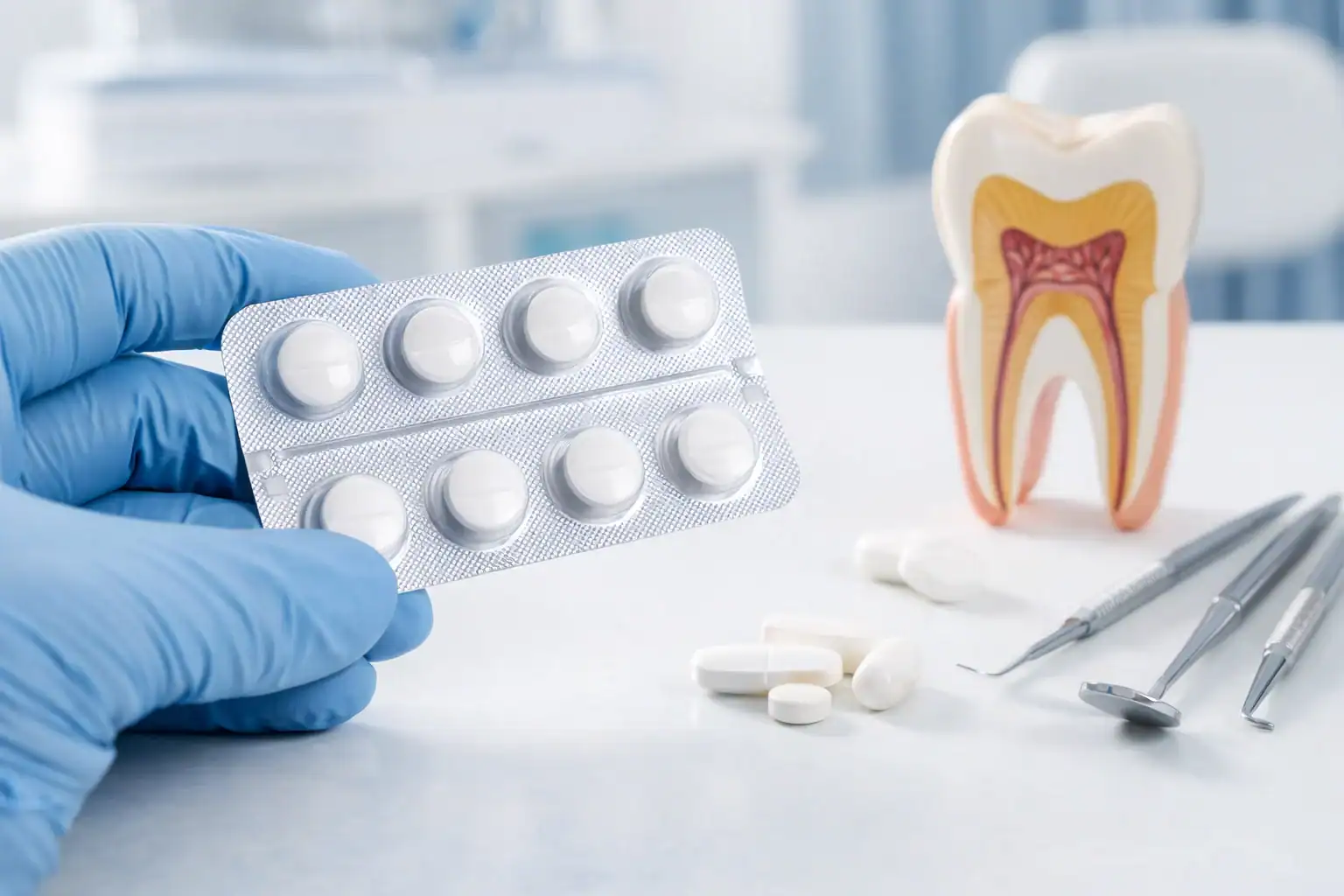
The pulp at the center of each tooth contains a dense network of nerves and blood vessels. When decay, infection, trauma, or pressure reaches this pulp, it triggers an inflammatory response that compresses those nerve endings — producing the sharp, throbbing, or radiating pain most people recognize as a toothache.
Understanding why the pain occurs helps explain why certain pain relievers work better than others. Anti-inflammatory medications, for instance, can reduce the swelling that puts pressure on nerves — making them particularly effective for dental pain compared to simple analgesics that only block pain signals without addressing the inflammation.
For most mild to moderate toothaches, OTC medications are the first line of defense. Here are the most effective options dentists recommend:
OTC — First Choice
Ibuprofen is widely considered the gold standard for dental pain relief. As a nonsteroidal anti-inflammatory drug (NSAID), it works by reducing the prostaglandins that drive inflammation — directly targeting one of the core mechanisms behind toothache pain. Most dentists recommend taking 400–600 mg every 6–8 hours with food (for adults without contraindications). For moderate pain, alternating ibuprofen with acetaminophen every few hours can provide more continuous relief than either drug alone.
Best for: General toothaches, post-extraction pain, inflamed gums, mild abscess discomfort.
Caution: Not suitable for people with kidney disease, stomach ulcers, bleeding disorders, or those taking blood thinners. Always follow label dosage directions.
OTC — Strong Alternative
Naproxen is another NSAID that works similarly to ibuprofen but has a longer duration of action — lasting up to 12 hours per dose. This makes it convenient for overnight pain management or for patients who prefer less frequent dosing. It’s especially helpful for persistent, aching dental pain.
Best for: Sustained pain relief, especially overnight. Useful when ibuprofen wears off too quickly.
Caution: Same precautions as ibuprofen. Do not take both NSAIDs simultaneously.
OTC — Safe Combo Partner
Acetaminophen doesn’t reduce inflammation, but it is an effective pain reliever and is safe for people who cannot take NSAIDs (such as those with stomach issues or kidney concerns). It’s also safe to take alongside ibuprofen — alternating the two every 3–4 hours can keep pain more consistently controlled. The standard adult dose is 500–1,000 mg every 4–6 hours, not exceeding 3,000–4,000 mg per day.
Best for: Patients who can’t take NSAIDs; combination use with ibuprofen for stronger round-the-clock relief.
Caution: Do not exceed the daily maximum dose. Avoid alcohol. Check other medications for hidden acetaminophen content.
OTC — Topical
Topical benzocaine products provide fast, localized numbing by temporarily blocking nerve signals at the site of application. They’re particularly useful for surface-level pain — such as a sore gum, canker sore, or minor tooth sensitivity — and can provide quick, targeted relief within seconds to minutes. Apply a small amount with a clean finger or cotton swab directly to the affected area.
Best for: Immediate topical relief; gum pain; surface-level tooth sensitivity. Useful as a bridge while waiting for oral medications to kick in.
Caution: Not for use in children under 2 years. Avoid overuse. For external gum application only — do not swallow. Adults should use only the 7.5–10% strength formulas.
While not substitutes for medication, a few evidence-backed remedies can complement your pain relief routine:
Clove oil (eugenol): A natural anesthetic used in dentistry for generations. Applying a small amount to the affected tooth with a cotton ball can help numb the area temporarily. Many OTC dental products contain eugenol for this reason.
Salt water rinse: Dissolving half a teaspoon of salt in 8 oz of warm water and gently swishing can help reduce oral inflammation, clear bacteria, and soothe irritated tissue.
Cold compress: Applying an ice pack wrapped in a cloth to the outside of your cheek for 15–20 minutes can reduce swelling and numb the area, particularly helpful for trauma-related tooth pain or abscess swelling.
Peppermint tea bags: Slightly cooled, moist peppermint tea bags placed against the affected gum can provide mild numbing and soothing effects due to the menthol content.
For severe dental pain — such as an untreated abscess, post-surgical discomfort, or nerve-related conditions like trigeminal neuralgia — a dentist may prescribe stronger medications. These are typically short-term solutions used alongside antibiotics (for infection) or as a bridge before or after a procedure.
Prescription-strength ibuprofen or naproxen (at higher doses than OTC formulations) may be prescribed for acute dental pain. In some cases, dentists prescribe combination products such as acetaminophen with codeine or hydrocodone for short-term use after extractions or oral surgeries. These carry risks for dependency and are typically reserved for cases where other options are insufficient.
For patients with complex needs — including drug allergies, sensitivity to standard formulations, or conditions like TMJ pain and oral neuropathies — compounded medications offer a personalized alternative. At Newport Center Compounding Pharmacy’s dental pharmacy, we work directly with dentists to create custom oral medications, including targeted topical gels containing anti-inflammatory agents, anesthetics, and other compounds tailored to the patient’s specific pain profile.
Transdermal preparations for conditions like trigeminal neuralgia and temporomandibular joint (TMJ) disorders — where nerve inflammation plays a central role — are a particular specialty. These allow active ingredients to be delivered precisely where they’re needed without the systemic exposure of oral medications.
Did You Know? Newport Center Compounding Pharmacy collaborates with dentists across Newport Beach and surrounding Orange County to formulate custom dental compounds — from canker sore rinses and pain gels to sugar-free, dye-free medications for patients with sensitivities. Learn more about our wound care and pain management services for personalized relief options.
Not every painkiller is safe for every person. Before reaching for the ibuprofen, it’s worth pausing to consider:
Do you have kidney disease, liver disease, or stomach ulcers? (Avoid NSAIDs; use acetaminophen cautiously)
Are you pregnant? (Acetaminophen is generally the safest option; avoid NSAIDs, especially in the third trimester)
Are you on blood thinners, antidepressants, or other medications? (Check for interactions)
Do you have a history of substance use disorder? (Avoid opioid-containing formulas unless absolutely necessary and under close supervision)
Throbbing, pressure-type pain: Ibuprofen or naproxen (NSAIDs reduce the inflammation driving the pressure)
Sharp, shooting pain: Topical benzocaine gel for immediate relief, followed by an oral NSAID
Dull, persistent ache: Alternating ibuprofen and acetaminophen on a schedule
Pain from gum irritation or ulcers: Benzocaine gel or a compounded antimicrobial/anesthetic mouth rinse
Pain medication can manage symptoms temporarily, but some situations require same-day or emergency dental attention. Seek care immediately if you experience:
Severe, unrelenting pain that doesn’t respond to over-the-counter medication
Swelling in the jaw, face, or neck — especially if it’s spreading or affecting your ability to swallow or breathe
Fever alongside tooth pain (may indicate a spreading dental infection)
A knocked-out or fractured tooth
Pus or discharge around the tooth or gum
Pain that wakes you from sleep repeatedly
A dental abscess, in particular, is a medical emergency. The infection can spread to the jaw, neck, or even the brain if left untreated. In this case, antibiotics and professional drainage are necessary — no painkiller will resolve the underlying infection.
Standard one-size-fits-all medications don’t always meet every patient’s needs. Some people are allergic to common excipients, need a pediatric-friendly formulation, or require a medication combination not commercially available. This is where compounding pharmacy plays a meaningful role in dental pain management.
At Newport Center Compounding Pharmacy in Newport Beach, our pharmacists work in close collaboration with dental professionals to create customized dental medications. Whether it’s a specially formulated topical anesthetic gel for a patient with sensitivities, a custom-dosed oral analgesic, or a combination rinse for post-surgical healing, we can prepare solutions that standard pharmacies simply can’t offer. Our team is available to answer questions about your medications and help coordinate with your care provider.
If you’d like to learn more about how personalized pharmaceutical care works, visit our about us page to meet our team and understand our approach to patient-centered compounding.
Recent Post