- 1401 Avocado Ave, Suite 104 Newport Beach, CA 92660,
- (949) 640-1320
- info@newportrx.com
- Monday - Friday: 9:00am-6:00pm | Saturday: 9:00am-2:00pm | Closed Sunday & Major Holidays

When you take care of a wound, one of the biggest problems you will experience is pain. Not just the healing results are affected by it, but also the person’s health status and quality of life. Modern wound care has seen the rise of pain management.
In modern wound care, pain management has evolved from simply treating symptoms to employing a comprehensive, patient-centered approach that addresses both the physical and emotional aspects of wound pain.
The comprehensive pain management plan starts with pain assessment according to the wounds, using commonly recognized tools such as visual analogue scales, numeric rating levels or observations of behaviors of unverbal patients.
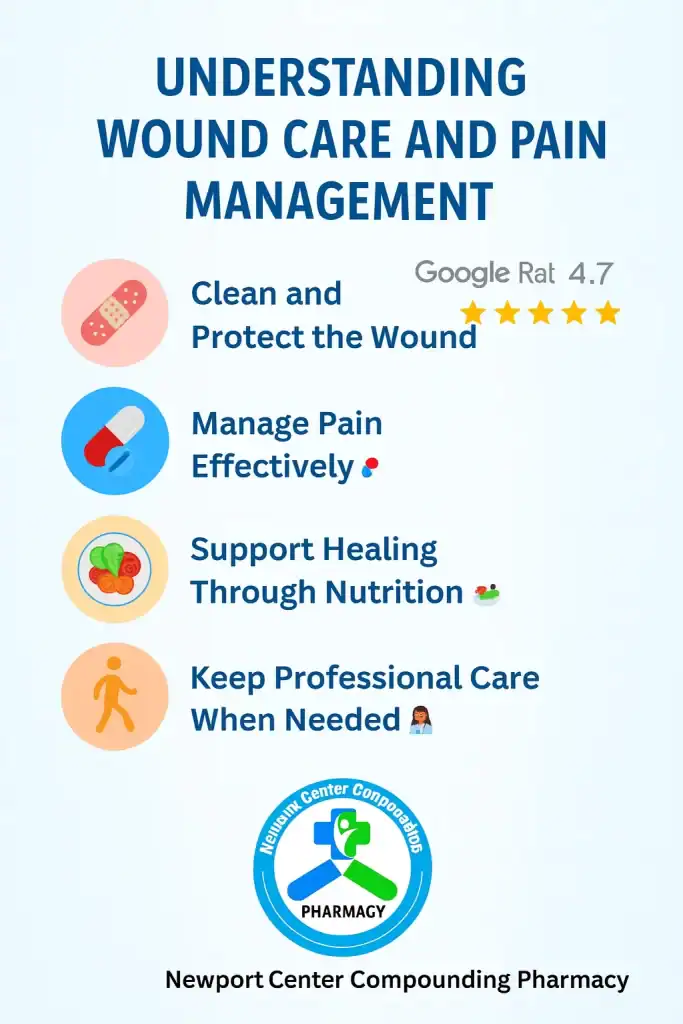
It is with an accurate assessment that clinicians can provide appropriate interventions and gradual monitoring over time for progress. Wound care and pain management requires distinguishing between acute and chronic wound pain.
Multimodal pain management combines pharmacological, topical, and non-pharmacological methods for maximum effectiveness. This approach addresses the diverse mechanisms of pain nociceptive, inflammatory, and neuropathic while minimizing medication dependence.
A patient-centered wound care model prioritizes individualized pain management plans based on the wound type, patient preferences, and overall health status. Effective communication between clinicians and patients fosters trust, reduces anxiety, and improves adherence to treatment.
Recent Post
A core element of wound pain management involves the use of topical analgesics and systemic medications. Topical agents such as lidocaine gels, nonsteroidal anti-inflammatory creams, or opioid-infused dressings can deliver localized pain relief with minimal systemic side effects. For more severe pain, oral analgesics ranging from acetaminophen to opioids may be necessary under close supervision.
In cases of neuropathic wound pain, often caused by nerve damage in diabetic or ischemic wounds, specific medications like gabapentin or pregabalin may be prescribed. These agents target nerve-related pain pathways, offering better control than standard analgesics.
Pain caused by a dress is something almost nobody in, but nonetheless if people choose the right dressing material and apply it correctly, they can avoid a lot of discomfort.
Using atraumatic dressings, silicone-based adhesives, and moist wound-healing materials can lower pain during dressing changes markedly. Doctors should also time dressing changes strategically after administering a maximum dose of painkiller, for instance to ensure that their patients are comfortable.
Modern wound care emphasizes non-pharmacological pain relief alongside medications. Techniques such as relaxation training, guided imagery, distraction therapy, and transcutaneous electrical nerve stimulation (TENS) have shown benefits in reducing pain perception. Additionally, maintaining a calm and supportive environment, gentle handling during procedures, and ensuring patient education can significantly improve comfort and cooperation.
In advanced or non-healing wounds, particularly in terminally ill patients, palliative wound care focuses on comfort rather than complete healing. Pain control strategies here may include stronger analgesics, moisture-retentive dressings, and psychosocial support to maintain dignity and quality of life.
Comprehensive wound pain management encompasses more than giving painkillers; it is also about pain assessment, topical analgesics, existing practices that don’t use drugs. Multi-modal strategies and humane treatment must now be an integral part of any tender care for wounds.
Newport Center Compounding Pharmacy offers advanced wound management solutions combining evidence-based medications, topical formulations, and innovative dressings that promote faster healing and pain relief. Contact us by calling at 949-640-1320 to know how to manage your pain and take care of your wounds.
Frequently Asked Questions on Wound Care And Pain Management
With a variety of pain management strategies integrated, Newport Center Compounding Pharmacy not only helps patients overcome chronic wounds but can efficiently relieve the pain of many acute cases as well.
They take a multimodal approach, employing new topologies, leading-edge technology and patient education.
Yes, at Newport Center Compounding Pharmacy, they cover neuropathic wound pain as well as comfort-focused care for clients with terminal-stage injuries.