- 1401 Avocado Ave, Suite 104 Newport Beach, CA 92660,
- (949) 640-1320
- info@newportrx.com
- Monday - Friday: 9:00am-6:00pm | Saturday: 9:00am-2:00pm | Closed Sunday & Major Holidays

Proper medication storage is essential to maintain medicine safety, drug effectiveness, and patient health. Many people unknowingly reduce the effectiveness of their prescriptions and over-the-counter drugs by storing them incorrectly. Factors like heat, humidity, light, and improper containers can cause medicines to lose potency or become unsafe.
Whether you’re managing daily prescriptions or storing emergency medications, following correct medicine storage guidelines can help protect your health and prevent accidental misuse.
Medicines are formulated to work under specific conditions. Exposure to excess heat, moisture, or air can break down active ingredients, making the medication less effective or even harmful. Poor storage can also increase the risk of accidental poisoning, especially in households with children or pets.
For families in coastal areas, climate plays an important role. Proper medicine storage in Newport Beach homes is especially important due to humidity and temperature fluctuations.
Recent Post
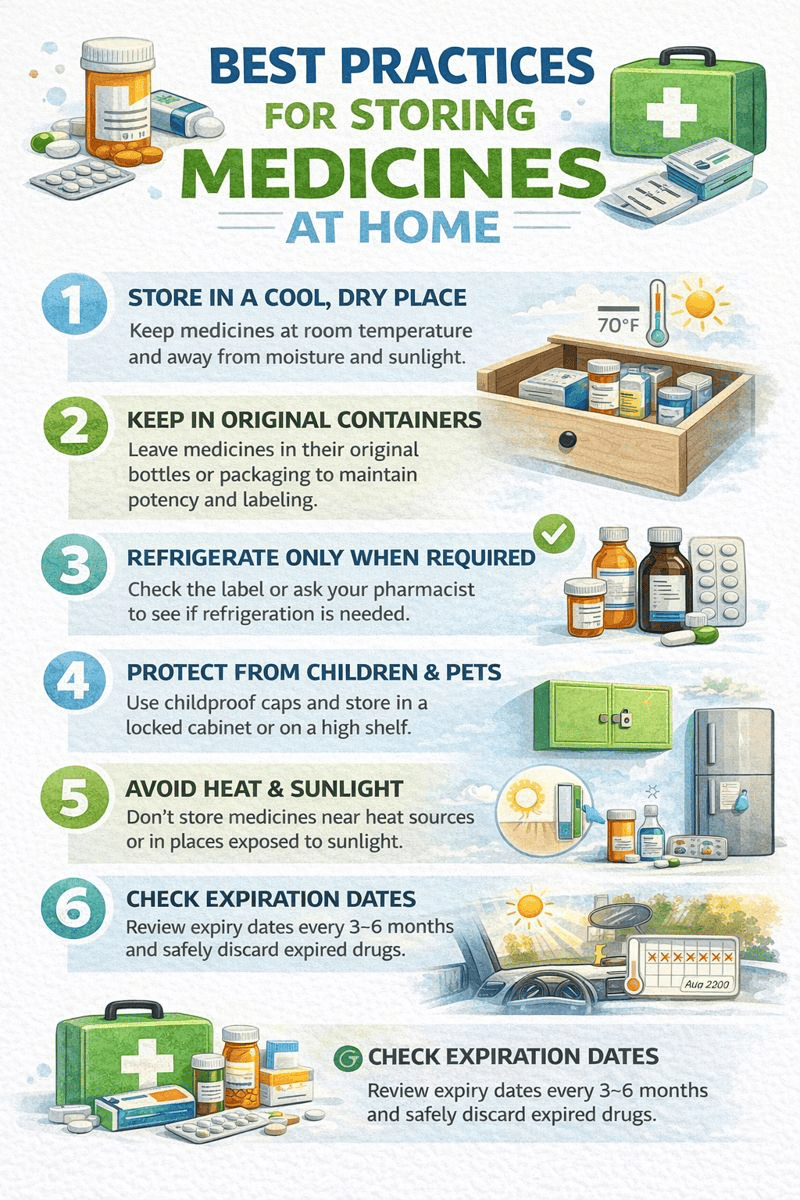
Store Medicines in a Cool, Dry Place
Most medications should be kept at room temperature, away from direct sunlight and moisture. Bathrooms and kitchens are common storage spots but are often poor choices due to heat and humidity.
A bedroom drawer or dedicated medicine cabinet in a dry area is ideal for safe medication storage at home.
Keep Medicines in Original Containers
Always store medications in their original packaging. Prescription bottles and blister packs are designed to protect drugs from light and air and include important labeling information such as dosage, expiration dates, and safety warnings. This is a key step in proper prescription storage and avoiding medication errors.
Refrigerate Only When Required
Some medicines, such as certain liquid antibiotics or insulin, require refrigeration. However, not all medications should be kept cold. Always check the label or consult a pharmacist before refrigerating any drug.
For residents seeking pharmacy guidance in Newport Beach, professional advice can prevent storage mistakes.
Protect Medicines from Children and Pets
Use child-resistant caps and store medications in locked cabinets or high shelves. Child safety is a critical part of home medicine safety tips, especially for painkillers, vitamins, and flavored syrups.
Avoid Heat and Direct Sunlight
Heat can degrade many medications, including tablets, capsules, and inhalers. Avoid leaving medicines in cars, near windows, or close to appliances that generate heat.
This is particularly important for prescription storage tips for people where temperatures can rise quickly.
Check Expiration Dates Regularly
Expired medications may lose effectiveness or become unsafe. Review your medicine cabinet every few months and safely dispose of expired or unused drugs according to local pharmacy or FDA guidelines.
Because of the coastal climate, residents should be extra cautious about humidity exposure. Using airtight containers when appropriate, silica packets, and climate-controlled storage areas can help maintain medication quality.
Searching for how to store medicines safely in Newport Beach, best pharmacy advice, or prescription medication storage can help connect patients with local professional guidance.
Avoiding these mistakes improves drug safety and effectiveness and supports long-term health
Proper medicine storage helps protect your health and ensures your medications work as intended. Newport Center Compounding Pharmacy will help you to seek professional guidance when needed, you can avoid common storage mistakes and reduce health risks. Contact us today by calling at 949-640-1320 to get expert advice on safe medication storage and personalized pharmacy support you can trust.
Frequently Asked Questions (FAQs)
A cool, dry place away from sunlight, such as a bedroom drawer or dedicated medicine cabinet, is best for most medications.
No. Bathrooms have high humidity and temperature changes that can reduce medication effectiveness.
Yes. Heat can break down active ingredients, making medicines less effective or unsafe to use.
No. Only medicines labeled for refrigeration should be kept cold. Always check storage instructions.
You should check expiration dates every 3–6 months and safely dispose of expired medications.
It’s best to keep medicines in their original containers to maintain protection and avoid dosing errors.